
Australia's Electric Prime Mover Problem Is No Longer the Prime Mover
Grid Rig
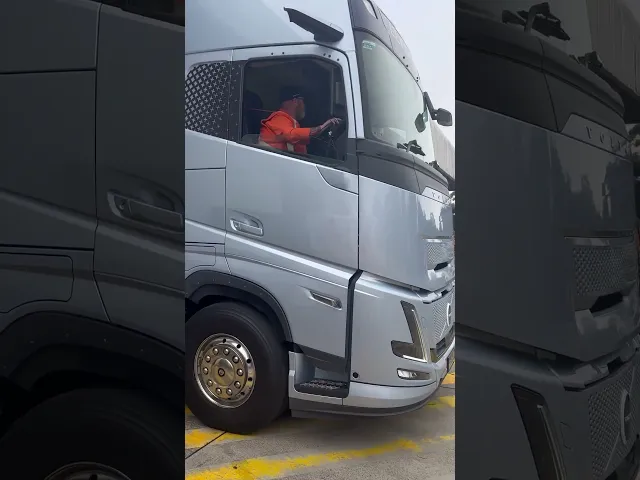
A run of trials through 2026 has largely settled the question of whether battery-electric trucks can do the work. The harder question, and the one now holding the transition back, is how operators should power them. (Hero image credit: Ausgrid)
In May, Ausgrid ran a Volvo FH Aero Electric prime mover out of its Somersby warehouse on the Central Coast, hauling loads of more than 30 tonnes on routes stretching from the Upper Hunter to southern Sydney. Over a fortnight it did the same work as the diesel prime movers that shift cable drums, poles and concrete across a network covering 22,000 square kilometres.
"The truck drivers absolutely love it," Ausgrid's head of fleet and EV charging, Nick Black, told the Newcastle Herald. "It's super quiet, really easy to drive, and has heaps of torque." Group executive Nigel Lowry noted the truck had carried significant loads and operated productively alongside the existing fleet.
The vehicle question is close to settled
Ausgrid is one data point among many. Team Global Express is five years into a $44.3 million electric fleet programme at Bungarribee in Western Sydney, backed by $20.1 million from ARENA. Toll is running 28 battery-electric vehicles, including ten Volvo FM Electric prime movers, across ten sites under Project TruckVolt. Woolworths and Zenobē have leased 148 electric trucks in what is billed as the country's largest rollout. Coles has electric prime movers on B-double freight routes in New South Wales.
The economics have changed too. March 2026 brought a record 44 electric truck sales, up 500 per cent month on month, and the first Australian instance of electric models offered at the same upfront cost as diesel equivalents. Black puts Ausgrid's electric prime mover at roughly 1.5 times the purchase price of the diesel it replaces, with a total cost of ownership already below it.
Yet electric trucks accounted for only 0.9 per cent of the 12,003 trucks and heavy vans sold in Australia this year. Writing in The Energy, Kate Burgess put it plainly: in China, half of all new trucks sold are electric. In Australia the figure is fewer than one in a hundred.
The constraint has moved downstream
Ask operators what is stopping them and the answer is rarely the truck.
Rainer Knobloch, who is building charging hubs across inner Melbourne, told Burgess that fear of nowhere to charge is the main deterrent, and that rolling out charging infrastructure can take up to two years. JET Charge puts depot lead times at 18 to 24 months once grid upgrades, planning approvals and high-capacity electrical equipment are accounted for. Chief executive Tim Washington frames the problem as a timing mismatch: the question is no longer whether to electrify, but whether the charging will be ready when the vehicles arrive.
The numbers behind that delay are substantial. Analyst David Leitch calculated for the ABC that a megawatt-scale truck charging hub with 20 to 50 bays costs between $35 million and $85 million, and that grid connection is the single biggest cost variable within that. A 20-megawatt connection can require upgrades costing three to eight million US dollars on its own. Against ARENA's estimate that Australia needs up to 165 freight charging hubs, the national bill runs to somewhere between six and fourteen billion dollars.
Even sophisticated operators get caught. Toll reported significant variation in electricity supply capability between sites despite conducting upfront assessments. Its summary is worth quoting: the technology works and the vehicles are performing, but the complexity sits around everything that supports them.
Some have simply gone around the problem. Centurion built Australia's first fully off-grid heavy electric truck depot at Hazelmere in Perth, running 30 Mercedes-Benz eActros on 4.4 megawatts of rooftop solar and 10.3 megawatt-hours of storage. The project team estimated that waiting for a grid connection would have added at least another 12 to 24 months.
What the Ausgrid trial really tested
The Ausgrid trial didn’t just test the truck, it also tested the charging model behind it.
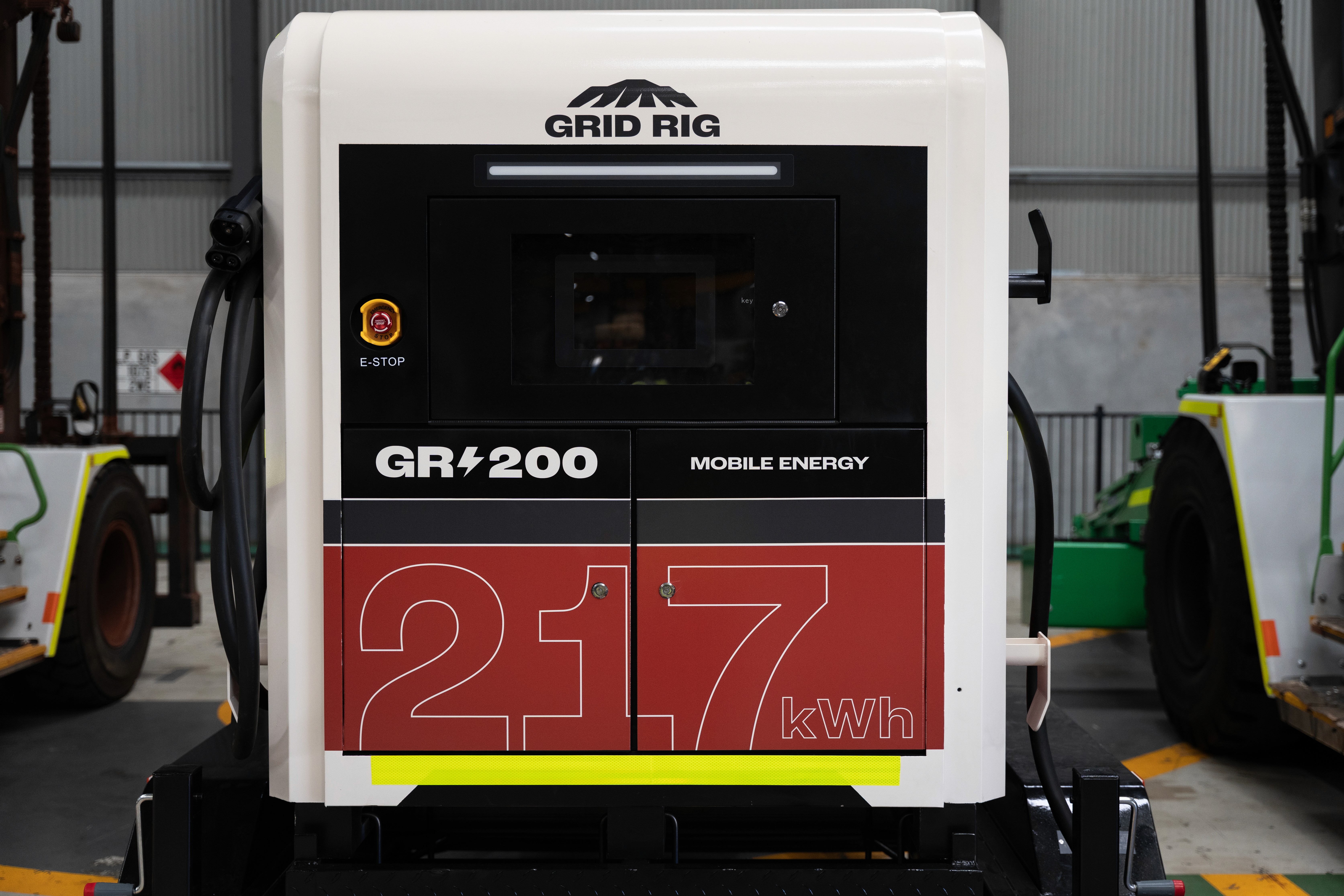
The solution was integrated by Australian start-up Hub Zero Energy and supplied by Grid Rig: a portable 180 kilowatt charger with its own battery, drawing steadily from a standard connection and discharging quickly into the truck at end of shift, refilling it in about two hours. As reported by energy news outlet ESD News, it was installed in a matter of hours, not months.
"It's essentially a box that's got a battery in it and a charger in it," Hub Zero chief executive Mahan Perera explained. "It can connect to the grid and sort of slow charge from the grid, but then when the truck comes in, it can download the energy very quickly into the truck." His summary is clear, even blunt: no grid upgrade, no digging in the ground, and therefore cheaper than fixed solutions that can take years to deploy.
Where that leaves the transition
Battery buffering solves a timing problem rather than a cost problem, and it works best for a specific set of duty cycles. Back-to-base fleets, depot operations, trials and temporary sites fit well. Long-haul does not yet. Ron Finemore Transport's chief of fleet, Laurie Brothers, calls electrification inevitable while noting that a predominantly long-haul operation can only go so far before it runs out of charge. Diesel will move most of Australia's freight task for years, and we shouldn't pretend otherwise.
But the policy settings aren't helping either. The New Vehicle Efficiency Standard applies only to vehicles up to 4.5 tonnes, leaving heavy vehicles outside the only national mechanism that's pulling cleaner models into the market. Meanwhile, connection queues lengthen. Ausgrid itself concedes that processing an application for a single charging site currently takes 18 to 24 months.
This reframes the question facing fleet operators. It is not whether the trucks are ready. On the evidence of 2026, they are. It is whether an operator waits two years for a permanent connection before finding out what electrification does to their cost base, or whether they start now with infrastructure that can be stood up in a day and moved when the work moves.
—-
Grid Rig builds mobile battery energy storage and EV charging systems for Australian industry, from 103 kilowatt-hours to two megawatt-hours, deployable without a grid connection. More at grid-rig.com.au.