
What the $400 Million Heavy Vehicle Package Fixes, and What It (Deliberately) Doesn't
Grid Rig
The Productivity Commission's report on heavy vehicle reform is more candid about the limits of its own recommendations than most of the coverage has been. It tells fleet operators something useful.
—
There is a section heading in the Productivity Commission's final report on heavy vehicle reform that provides more insight than most of the commentary written about it. It sits in the chapter dealing with barriers to electric truck charging, and it reads: "Grid connections are challenging but largely not for administrative or regulatory reasons."
The wording matters, because it goes to what the Commission was asked to do. Treasurer Jim Chalmers commissioned the report in September 2025 to model five specific reform areas: road access for high productivity and zero-emission vehicles, a national system for automating access permits, administrative and regulatory barriers to charging infrastructure, curfews on zero-emission trucks, and driver competency.
The Commission’s scope was red tape. The Commission's answer, in effect, was that red tape is not the main problem.
What was actually agreed
The report was delivered to government on 30 June 2026 and released publicly on 14 August. Within days, federal, state and territory treasurers agreed a $400 million reform package funded through the National Productivity Fund and contingent on jurisdictions delivering the agreed reforms.
The industry response was warm, for good reason. "Red tape has been one of the biggest handbrakes on electric trucks in Australia," said Cameron Rimington, heavy vehicle lead at the Electric Vehicle Council. Heavy Vehicle Industry Australia, which had been pressing for the report's release since June, framed freight productivity as a cost-of-living issue rather than a transport one.
The underlying problem is significant. Road transport accounts for around five per cent of Australian GDP and employs 273,000 people, yet truck physical productivity has been flat since the mid-2000s after three decades of steady growth. The Australian truck fleet has a median age of 15 years, notably older than comparable OECD countries, which means fleet turnover is slow regardless of the policy settings.
There is one detail worth pinning down because it has been blurred in the coverage. The widely quoted figure of up to $4 billion a year in GDP comes from two of the five reform areas: raising General Mass Limits, worth $900 million to $2.7 billion, and implementing the National Automated Access System, worth $600 million to $1.3 billion. Both are about road access and permits for all heavy vehicles. The two recommendations dealing specifically with zero-emission trucks, charging infrastructure and curfews, carry no separate GDP estimate at all.

A question of sequence, not failure
The charging recommendations are sensible and cheap. State and territory governments should update land-use definitions so that depots, freight centres, freight nodes and rest stops are explicitly permitted to charge electric vehicles. Installing chargers should be exempt from planning permission where it already fits the land use. The Commonwealth should build a mapping tool carrying substation-level network capacity data so operators can see what is available before they commit to a site.
The Commission puts a number on the planning change: roughly $5,000 to $15,000 saved per site. That is a real saving, and it is worth setting against what sits on the other side of the ledger.
Analyst David Leitch calculated for the ABC that a 20 megawatt connection can require network upgrades costing three to eight million US dollars before a single charger is installed, and that a megawatt-scale charging hub runs to between $35 million and $85 million all up. Time is the harder part. JET Charge puts depot charging lead times at 18 to 24 months once grid upgrades, approvals and high-capacity equipment are accounted for. Ausgrid has said much the same about the time it takes to process an application for a single charging site.
The reform package removes a cost measured in thousands. The constraint it leaves untouched is measured in millions, and in years.
This is not a criticism of the Commission, which was explicit about the limits of its scope: administrative and regulatory barriers matter now so they do not become impediments later, once market and technological conditions are ready to drive a rollout.
The distinction is one of sequencing. The package clears obstacles that would bite in 2030. But the constraint operators are hitting in 2026 sits with distribution networks, and no treasurer can legislate a connection queue to be shorter.
The curfew change is the one to watch
The most interesting recommendation has had the least attention.
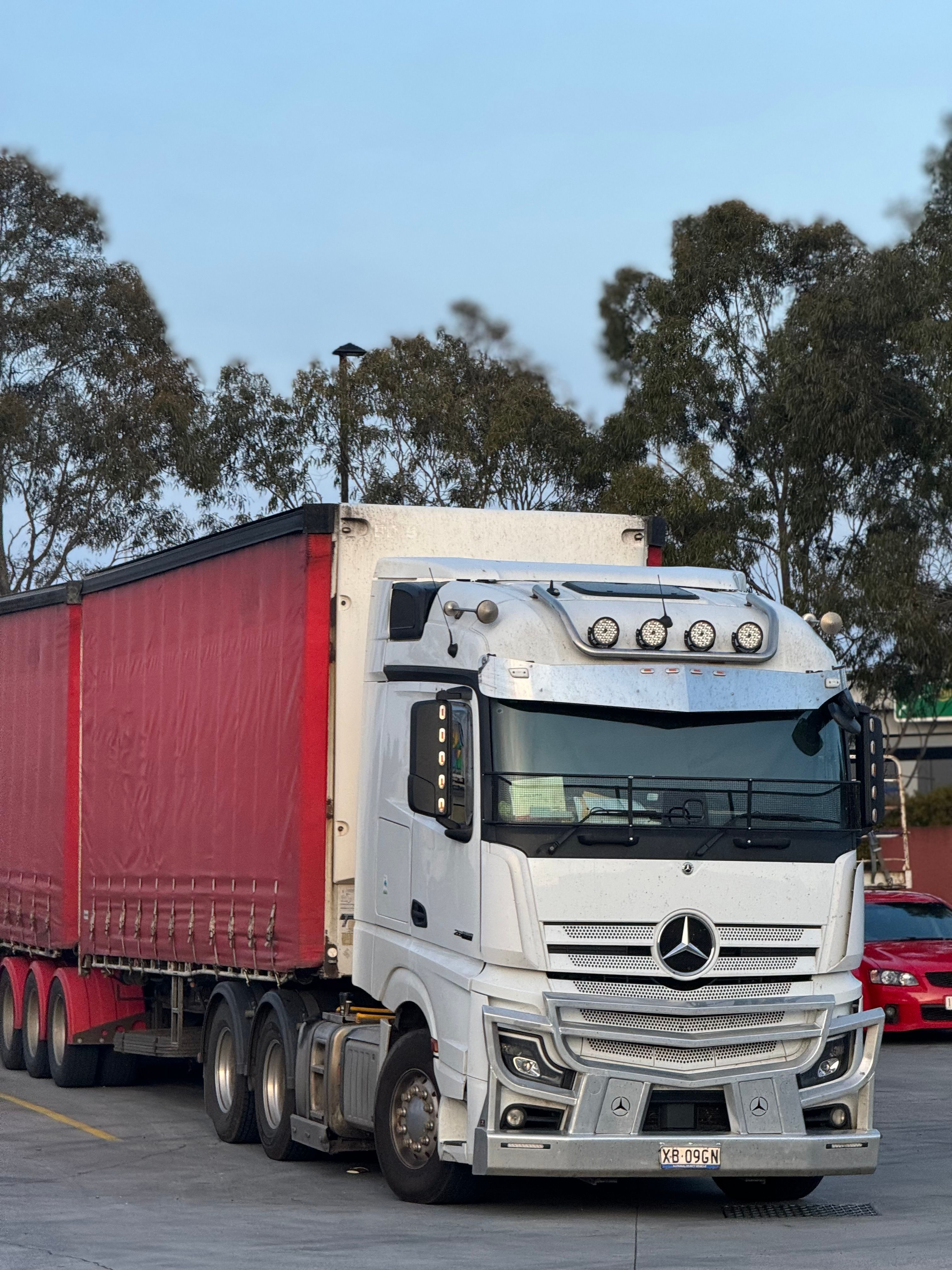
Heavy vehicle curfews come from two places: local traffic controls restricting trucks on particular streets, which the Commission found are almost exclusively Victorian, and delivery-hour conditions attached to local planning permits, which are more widespread. Neither currently distinguishes between a diesel truck and an electric one. Because electric trucks are significantly quieter, the Commission recommends exempting them from time-related restrictions on deliveries, with noise managed through existing environmental regulation instead.
For urban freight, that is a genuine commercial unlock. It also carries a notable second-order consequence.
Depot charging economics currently rest on a simple assumption: the truck works during the day and charges overnight, drawing slowly from a modest connection during the hours nobody needs it. Remove the curfew and that assumption falls apart. A quiet truck that can make deliveries at two in the morning is a truck that is not plugged in at two in the morning. The more successfully curfew reform extends operating hours, the more the charging requirements shift from overnight trickle to fast turnaround between shifts.
Curfew relief is worth having. But it will make charging harder before it makes it easier.
What this means at depot level
Read together, the Commission's recommendations point operators toward a sensible strategy: find sites where the power already exists. That is what the substation-level mapping tool is for, and for a business choosing a new distribution centre it is good advice.
It is less useful when the location is dictated by the freight task. Ports, mine sites, construction projects, regional depots and temporary yards are where they are for reasons that have nothing to do with network capacity, and relocating a depot to suit a substation is not a real option for most operators. For those sites, the power has to go to the work rather than the other way round.
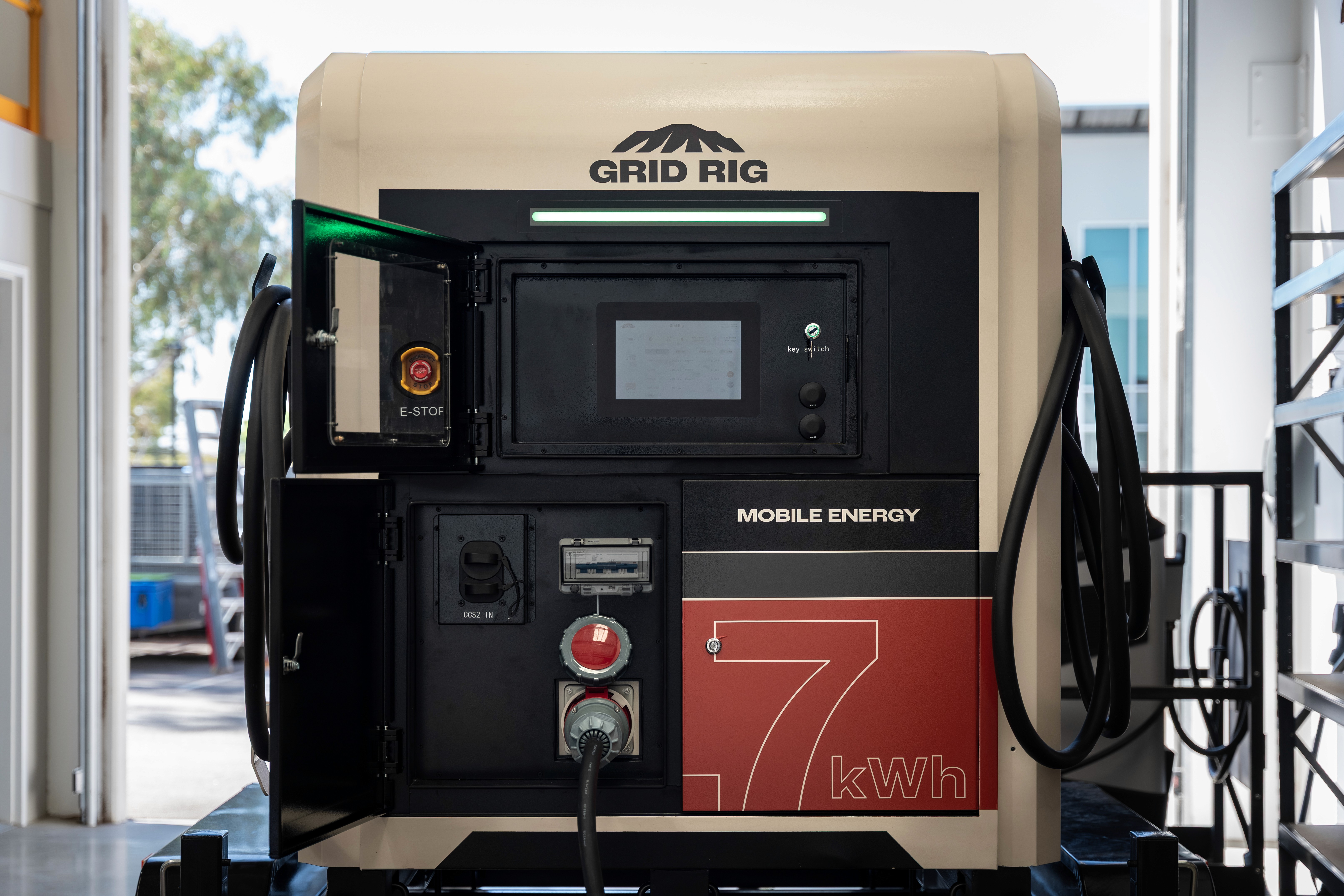
That is the gap mobile and battery-buffered equipment fills. A unit that charges steadily from whatever connection exists and discharges quickly into a vehicle does not shorten a connection queue. It makes the queue survivable. Some operators have already drawn that conclusion. Centurion built its Hazelmere depot in Perth entirely off-grid, on solar and storage, after estimating that waiting for a network connection would have added at least another 12 to 24 months. We looked at the same problem from the vehicle side in our piece on Australia's electric prime mover trials.
None of this makes the reform package less worthwhile. It removes genuine friction, and the mass-limit work in particular addresses a payload penalty that has disadvantaged electric trucks in every state. But operators reading the headlines should be clear about what has changed. Getting permission to build depot charging just became easier. Getting the power to it did not.
—
Grid Rig builds mobile battery energy storage and EV charging systems for Australian industry, from 103 kilowatt-hours to two megawatt-hours, deployable without a grid connection. More at grid-rig.com.au.