
Five Barriers Holding Back Electric Heavy Equipment Adoption in Australia
Grid Rig
Five Barriers Holding Back Electric Heavy Equipment Adoption in Australia
Hero image source: Unsplash
Australia's governments are setting net zero targets and funding electrification programs. But the regulatory framework is actively making it harder to deploy the vehicles and equipment that would get them there.
—-
You can buy an electric prime mover in Australia today. Volvo, SANY, Foton, Windrose, Daimler. But whether you can legally run one at full capacity depends on which state you are in, which road you are on, and which manufacturer built it.
In March 2026, more than 300 industry leaders gathered at Parliament House for Freight Forward 2026, the national summit on commercial vehicle decarbonisation.
It was unanimous: the technology is ready, the industry is willing… and the regulatory framework is the bottleneck. The Electric Vehicle Council's open letter to Australian governments, co-signed by Volvo Trucks, SANY, DHL, IKEA, Daimler Truck, and dozens of others, put it plainly: harmonised rules could put significant numbers of electric trucks on Australian roads within the first year.
Not everyone in the industry agrees on how fast or how far those changes should go. But the questions themselves are now unavoidable.
Here are five regulatory barriers that are standing in the way.
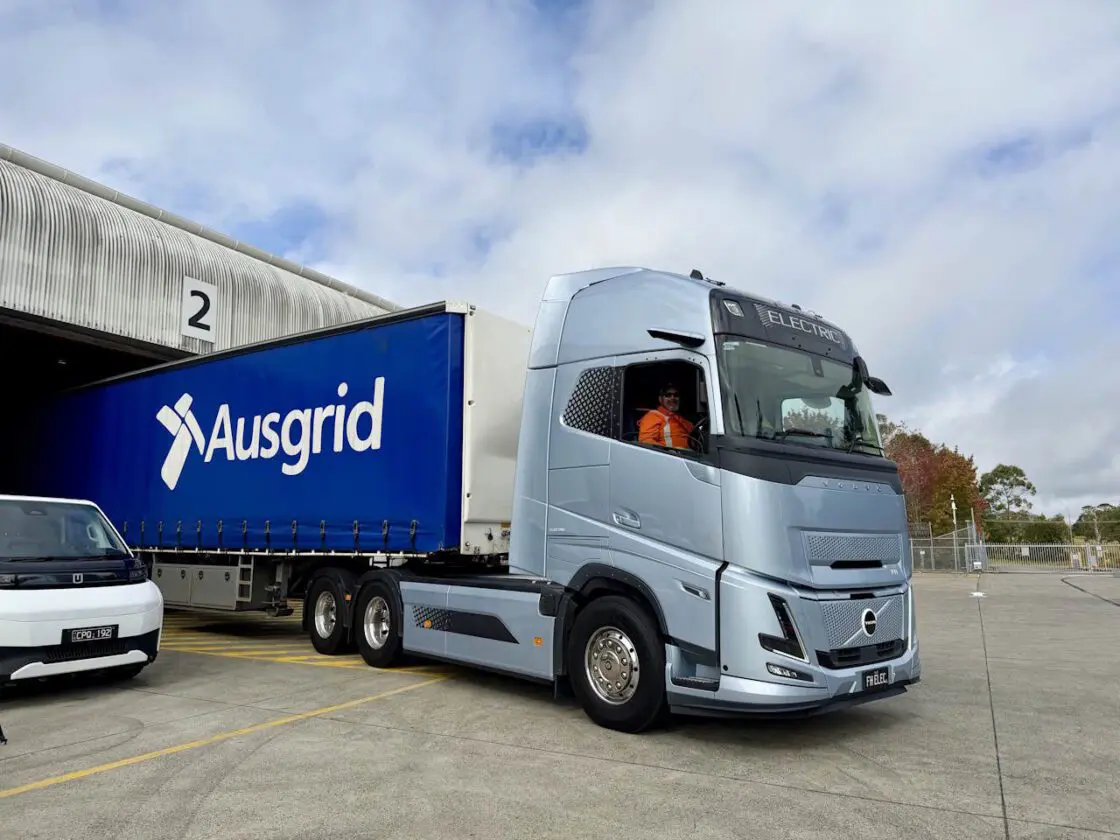
Ausgrid's new Volvo FH Aero Electric prime mover (Image Credit: Ausgrid. Source: The Driven)
1. Steer axle mass limits that penalise battery weight
Electric trucks are heavier than their diesel equivalents, primarily because battery packs sit at the front of the vehicle, loading the steer axle. The standard legal steer axle limit in Australia is 6.0 tonnes, with a 0.5 tonne concession for compliant vehicles bringing it to 6.5 tonnes. That is not enough for most heavy-duty electric prime movers.
The response has been a patchwork. Victoria permanently allows 7.5 tonnes on specific roads, but initially only for Volvo prime movers. NSW is running a two-year trial at 8.0 tonnes. South Australia has a trial at 7.5 tonnes. Queensland has not published concessions for zero-emission vehicles. Western Australia, where the majority of mining and heavy industry operates, has no concession at all.
The same truck is legal in one state and non-compliant in the next. For national fleet operators, that is not a workable framework.
The counter-argument from some in the freight industry is not unreasonable: higher steer axle loads increase pavement stress, and local roads were not designed for them. Some road infrastructure managers argue the technology should be engineered to meet existing limits as battery weight decreases over time, rather than adapting the regulations to suit current designs.
But the facts stand: the vehicles being manufactured today by major global OEMs exceed the current thresholds, and the transition cannot wait for the next generation of battery chemistry to arrive.
2. Road access that varies by postcode
Even where mass concessions exist, they apply only to pre-approved road networks. An electric truck may be permitted on a state highway but non-compliant on the local road leading to the depot, the mine site, or the port. Victoria's access map covers state-owned roads. The local roads connecting those routes to the places where freight actually needs to go are a separate, unresolved question.
The EVC's open letter called this out: harmonised road access, not piecemeal trials, is what the industry needs. State-by-state exemptions with different mass limits, different approved networks, and different OEM eligibility rules create an administrative overhead that adds cost for national fleet operator, regardless of the vehicle's emissions profile
A nationally consistent framework doesn’t necessarily have to mean identical mass limits on every road. It could mean a consistent assessment process with road-specific conditions where warranted.
(Source: Pexels)
3. Road user charges with no permanent exemption
The federal government slashed the heavy vehicle road user charge to zero until 30 June 2026 as a fuel crisis response. But there is no permanent exemption for zero-emission heavy vehicles.
The EVC has argued that imposing a per-kilometre road user charge on electric trucks at this stage of the transition directly undermines the cost advantage that drives adoption. The diesel fuel excise already functions as an implicit road charge for conventional vehicles. Applying an equivalent charge to electric vehicles before they have reached meaningful market share removes the cost incentives that make the business case work.
The counter-argument to that is straightforward: roads require funding regardless of what powers the vehicles using them, and a permanent exemption for one vehicle class creates a structural gap in the maintenance budget. The policy question is how to “phase in” contributions without killing adoption before it reaches a market share that’s meaningful.
The May 2026 budget included commitments to accelerate heavy vehicle reforms through National Competition Policy to support zero-emission vehicle uptake, but the structural question of long-term road user charges remains unresolved.
4. The charging network barely exists
Australia's first government-backed electric freight depot, at Wilton south-west of Sydney, is expected to open in late 2026. It will support up to 50 heavy electric trucks. It is one facility for the entire country.
For context: China sold over 231,000 new energy heavy-duty trucks in 2025, reaching 29 per cent market penetration. The EU sold nearly 13,000 electric trucks in the same year, a 70 per cent increase on 2024. Australia has approximately 1,000 electric trucks on the road nationally and almost no dedicated heavy vehicle charging network.
ARENA's $25.3 million commitment to NewVolt's shared electric truck charging network is a start, but the gap between current infrastructure and what is needed for a national freight network is measured in billions, not millions.
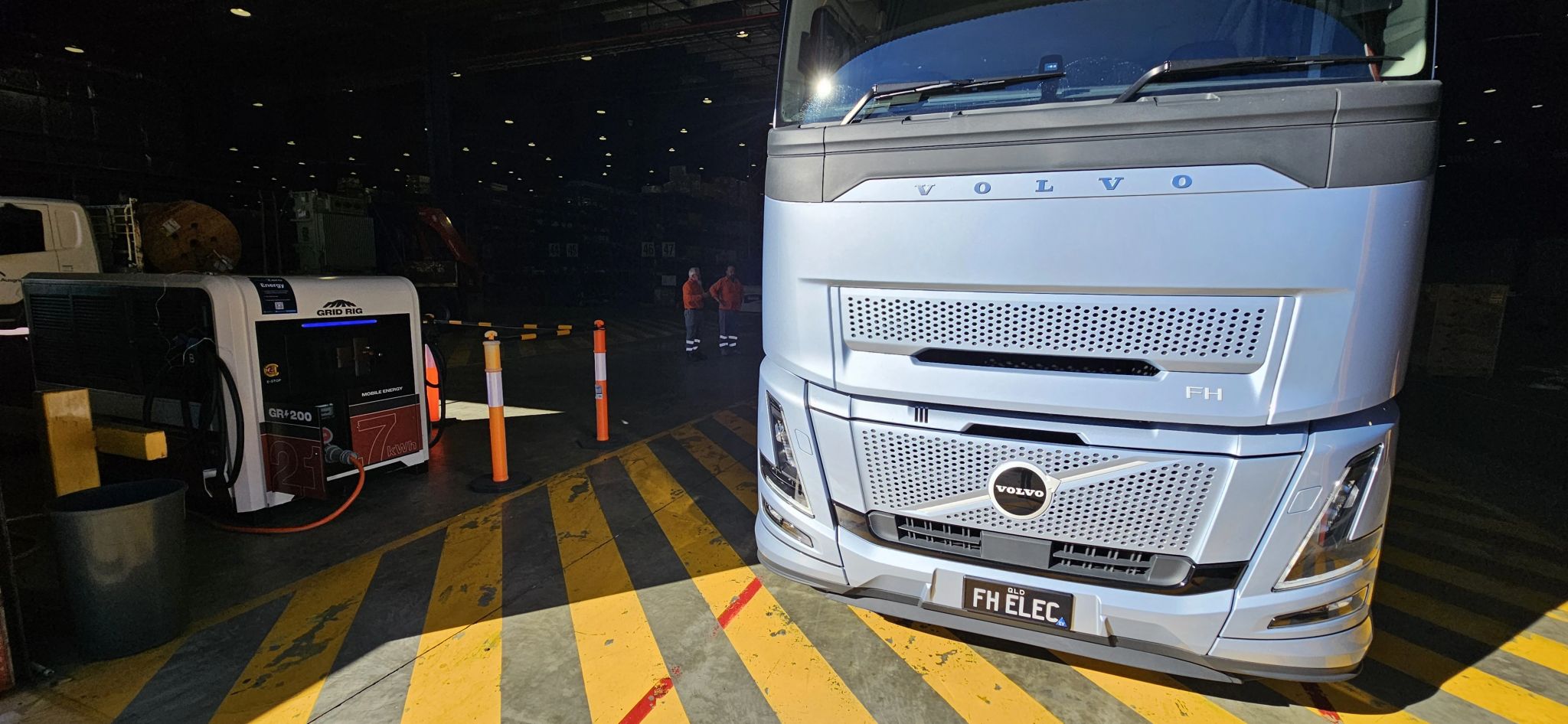
Grid Rig GR200 unit charging a Volvo prime mover (Source: Grid Rig)
5. Design rules still catching up
The Australian Design Rules (ADRs) are being updated to accommodate electric heavy vehicles, but the process is slow. ADR amendments clarifying the Register of Approved Vehicles for battery electric and fuel cell vehicles take effect on 1 July 2026, making it easier for these vehicles to access Euro VI mass concessions. But the Heavy Vehicle Industry Association noted that no test track in Australia currently meets the requirements of the standard specified in ADR 113/00, which governs acoustic vehicle alerting systems.
The broader HVNL reform package, passed by Queensland Parliament in November 2025, is expected to commence mid-2026. It will raise General Mass Limits to match current Concessional Mass Limits, increase maximum vehicle length from 19 to 20 metres, and extend Euro VI mass concessions to road trains. These are meaningful changes, but they address conventional fleet modernisation. The specific regulatory architecture for zero-emission heavy vehicles remains incomplete.
What happens next
The Freight Forward summit demonstrated an alignment among industry that few other policy areas can claim. The May budget signalled federal intent. Victoria's permanent mass concession set a precedent. And the first fully electric intercity freight delivery, a 480-kilometre round trip between Sydney and the Hunter region by Windrose, proved the technology works at a commercial scale on Australian roads.
But the gap between what the technology can do and what the regulations allow it to do is where the adoption will stall. Every month the framework lags behind, operators default to diesel. It’s not because they prefer it, but because the rules make it easier.
The barriers to electrification are increasingly regulatory rather than technical. And the industry, unanimously, is asking governments to catch up.
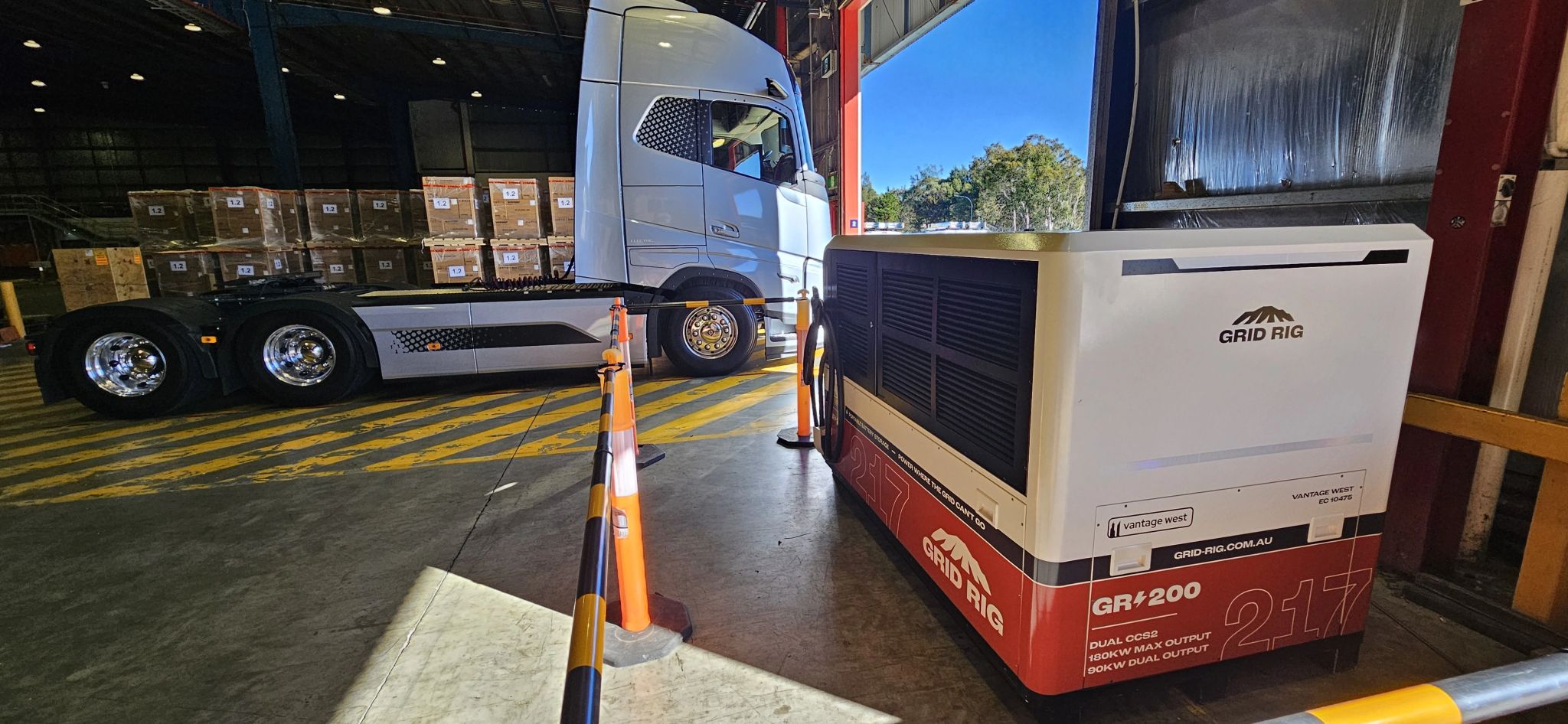
Grid Rig GR200 unit charging a Volvo prime mover (Source: Grid Rig)
Grid Rig provides mobile energy storage and EV charging infrastructure for mining, construction, and industrial operations across Australia. Grid Rig addresses the charging gap for operators who cannot wait for permanent grid connections or fixed depot infrastructure.