Electric Ground Support Equipment: Charging GSE Fleets at Australian Airports
Grid Rig Australia
Electric Ground Support Equipment: Charging GSE Fleets at Australian Airports
Australia now has two flagship electric ground support equipment projects, and a long tail of airports that cannot copy either of them. Understanding why is the useful part.
—-
Ground support equipment is the fleet that turns an aircraft around: the tugs, loaders and tractors working the apron between arrival and departure. Most of it has run on diesel for decades. That is changing quickly at the large end of the market and slowly everywhere else, and the difference comes down to charging infrastructure rather than the equipment itself. This article covers what electric GSE includes, why its charging profile is unusual, and how Australian airport operations are approaching the problem. For our commercial capability, see our airside EV charging and ground support equipment charging page.
Types of electric ground support equipment (eGSE)
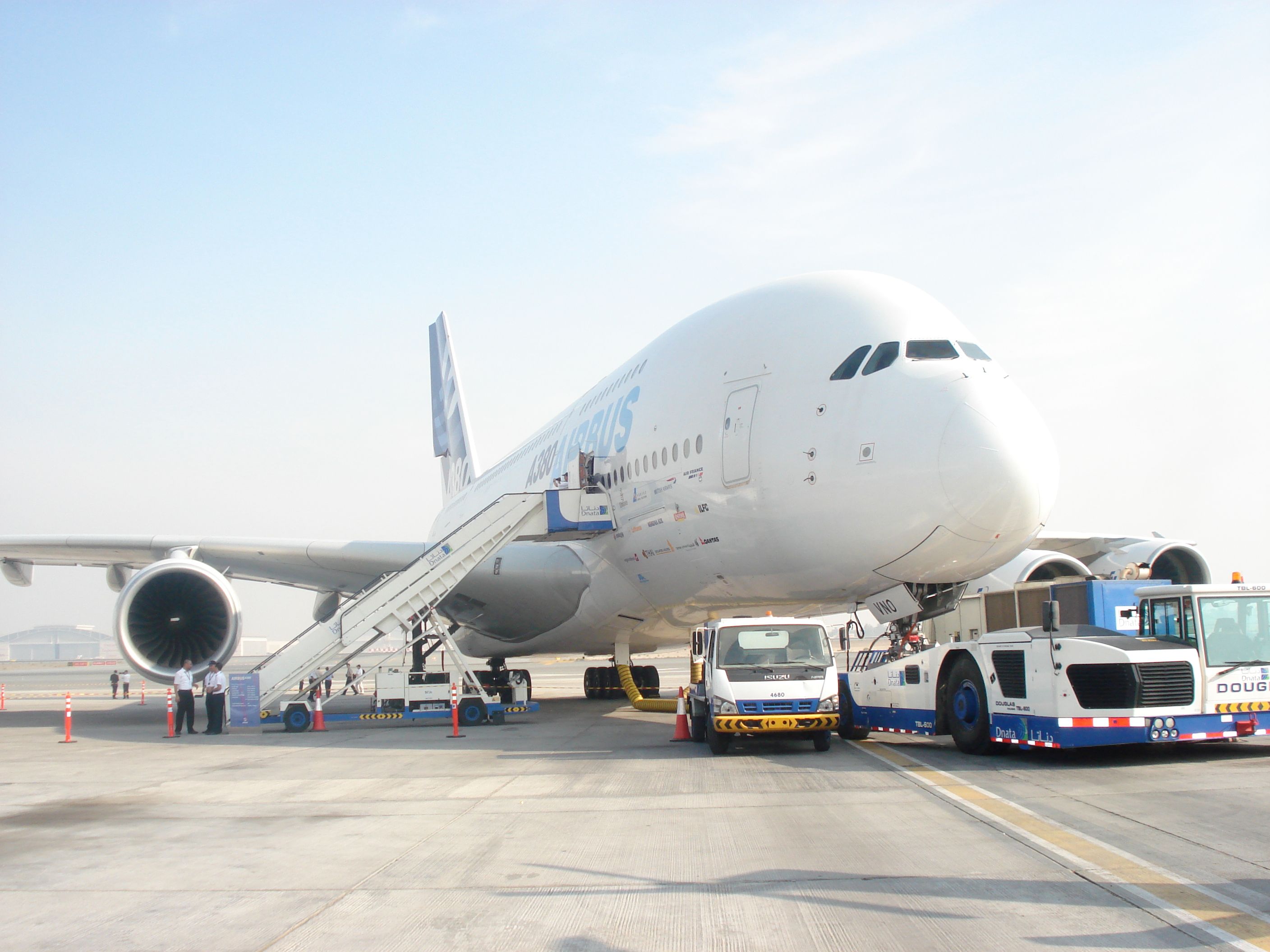
The eGSE category is broader than most people outside aviation expect. Ground handling fleets typically electrify in stages, starting with the equipment that has the shortest and most predictable duty cycles.
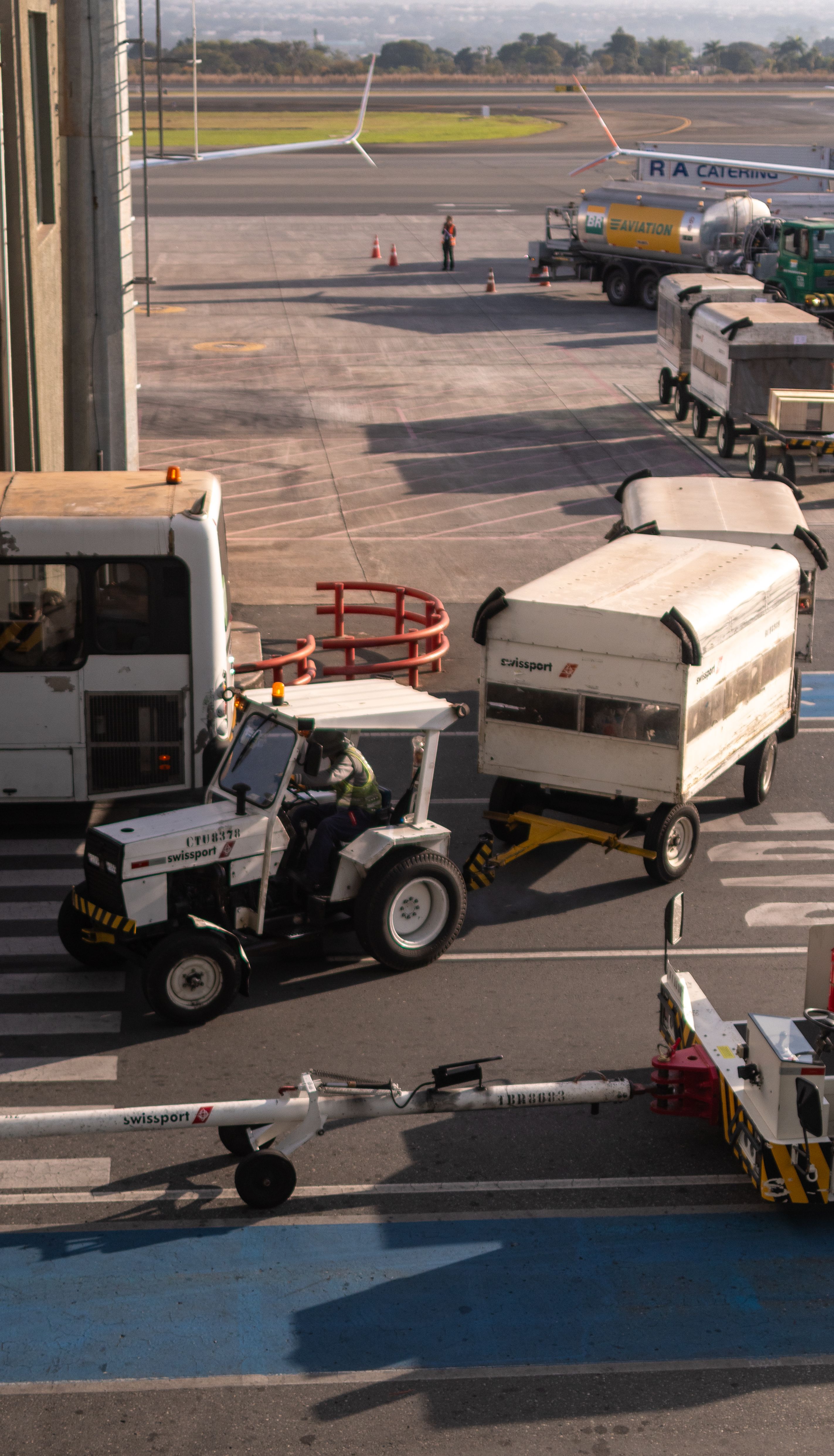
Baggage tractors and tugs
The highest-volume category and usually the first to electrify. Runs are short, repetitive and confined to a small area of the apron, which makes battery sizing straightforward. Brisbane Airport's rollout began with smaller equipment of this kind, on the reasonable basis that easy categories build operational confidence before hard ones.
Belt loaders and cargo loaders
Belt loaders move baggage into and out of the hold and are well established in electric form. Cargo loaders handle containerised freight, carry heavier lithium-ion batteries and draw considerably more energy per shift, which puts them later in most transition plans.
Pushback tractors and aircraft ground equipment
Used to tow and reposition aircraft on stand. These are among the most power-hungry electric GSE on the apron, and the category where charging times and battery capacity most directly constrain how many turnarounds a single unit can support.
Lavatory and potable water service vehicles
Lower utilisation and relatively simple to electrify. Often bundled into a later phase alongside other service vehicles rather than treated as a priority in their own right.
Ground power units
Ground power units supply electrical power to aircraft parked on stand so engines and auxiliary power units can be shut down. Electric GPUs are a distinct product category with their own supply requirements, and airports generally procure them separately from the charging systems that serve mobile ground equipment.

Why GSE charging infrastructure differs from other fleet charging
Ground support equipment has an unusual duty cycle. Equipment works intensively during an aircraft turnaround, then sits idle at the stand until the next one. Utilisation is high in bursts and low in aggregate, and the pattern is set by the flight schedule rather than by a shift roster.
That has two consequences for airside EV charging infrastructure.
First, opportunity charging works well here. Equipment returns to the same small number of locations repeatedly and has genuine idle windows, so it does not need the fast charging a road freight depot demands. Moderate power applied consistently often beats high power applied occasionally, and it is gentler on the lithium-ion batteries most eGSE now uses.
Second, location matters more than speed. GSE operates across terminals, cargo facilities, maintenance hangars and remote stands. Equipment sent to a distant charger is equipment not working a turnaround, and downtime on the apron propagates into delayed departures for the airline. Charging stations have to sit near where the equipment already is.
Airport ground support equipment charging at Brisbane and Western Sydney
Two Australian projects define the current state of play, and both are worth understanding on their own terms.
Brisbane Airport became the first Australian airport to install a common-use GSE charging system in an airside environment, starting with 35 charging stations and planning to expand beyond 100. The system is shared across ground handling providers, with the airport able to identify which equipment charged where, when, and how much energy it drew. Brisbane ran a full tender before selecting Freightquip and Advanced Charging Technologies.
Western Sydney International goes further. When it opens in October it is expected to run the highest proportion of electric GSE of any major Australian airport, with Freightquip supplying and operating a fleet covering belt loaders, cargo loaders, baggage tractors and pushback equipment. Thirty-four electric chargers were installed ahead of opening. The site runs on 100 per cent renewable electricity through CleanPeak Energy, backed by rooftop solar and a 120 megawatt-hour battery.
WSI also introduces something structurally new: an airport-wide GSE pooling programme, where a single shared fleet serves all ground handling operators through one digital platform linked to the airport's flight information system. Freightquip's chief operating officer, Andrew Steel, described it as "a real opportunity to help set a new standard" for airport ground operations.
Both projects share a precondition that is easy to overlook. Brisbane retrofitted a major capital-city airport through a multi-year programme inside a $5 billion development pipeline. WSI built from nothing, with charging designed in before the first aircraft arrived. Neither is a template a regional aerodrome can follow.
The regional tier is aviation's harder problem
The less visible half of Australian GSE electrification is happening at much smaller airports. Freightquip has been rolling out electric ground support equipment at Launceston, the Whitsundays, Ballina and Ayers Rock Airport serving Uluru, and delivered five electric regional belt loaders to Pilbara aerodromes operated by Fortescue.
These sites face the same constraints as the majors with none of the capital. Industry analysis of the sector consistently identifies the same barriers: high upfront capital costs, infrastructure gaps for charging, and fragmented procurement across airport authorities and ground handling contractors, with grid capacity and energy management named alongside equipment cost.
A regional aerodrome running a handful of electric belt loaders cannot justify a tender process, a permanent airside reticulation project, or charging systems sized for a fleet it does not yet own. It often cannot get the grid capacity easily either. The equipment is available and the business case for the vehicles is reasonable. The charging infrastructure is the part that does not scale down.
Comparing GSE charging solutions
Approach | Best suited to | Main constraint |
|---|---|---|
Fixed airside charging stations | High-volume airports with stable stand allocation and a multi-year capital programme | Airside construction windows, security approvals and grid connection lead times |
Centralised depot charging | Airports where ground equipment can return to a single maintenance area between shifts | Travel time off-stand, which erodes equipment availability |
Mobile or battery-buffered charging | Regional airports, staged rollouts, remote stands and sites awaiting a permanent connection | Total energy throughput limited by the supply feeding the unit |
The honest position is that fixed airside infrastructure is the right answer at scale. An airport running a large electric GSE fleet across predictable stands, with the capital programme to support it, will find permanent charging cheaper per unit of energy and simpler to operate than any alternative. Brisbane's approach is correct for Brisbane.
The question is what an operator does when those preconditions are absent, or present but years away.
Where mobile charging fits for electric GSE fleets
Mobile and battery-buffered charging suits the cases the fixed model handles poorly: a regional aerodrome with six pieces of electric equipment, a staged rollout where fleet numbers are still uncertain, remote stands beyond the reach of installed infrastructure, or a terminal waiting on a grid connection or an airside construction window.
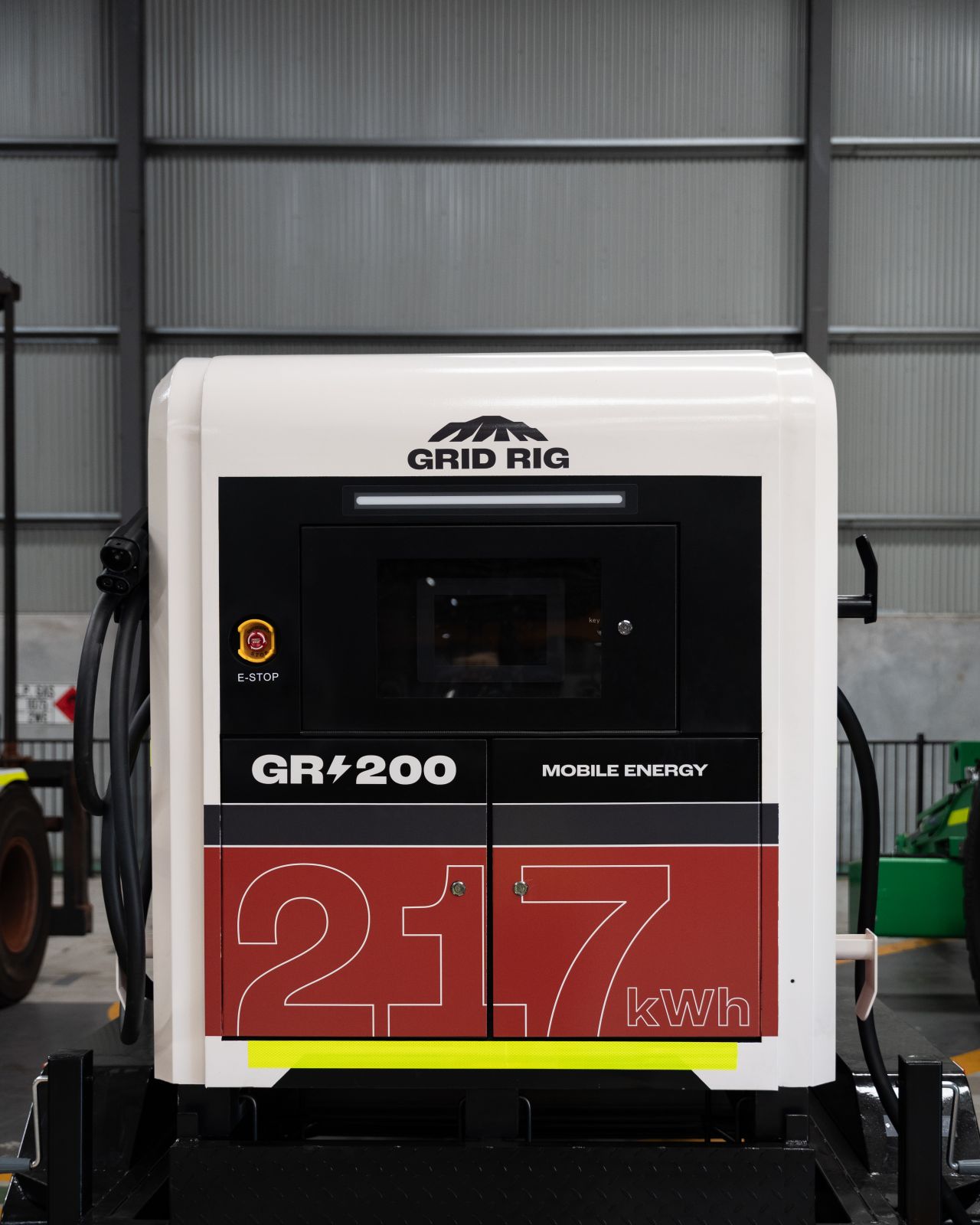
Grid Rig units draw steadily from whatever supply is available and deliver DC fast charging where equipment operates, without permanent installation. Units can be repositioned between terminals, cargo areas, hangars and maintenance zones as airport operations change. The range spans 103 kWh to 2 MWh, with CCS charging for vehicles and industrial power outputs for other airside equipment. Every unit carries AS3000 Part One compliance certification, IP54 protection and integrated fire detection and suppression, with licensed electrical support through our sister company Vantage West.
This does not replace a properly built airside charging system. It lets an airport start with the fleet it has rather than the fleet it plans to have, which for most of the regional tier is the more immediate question.

Frequently asked questions
What is electric ground support equipment? Electric ground support equipment, or eGSE, is battery-powered apron equipment used to service aircraft between flights. It includes baggage tractors, belt loaders, cargo loaders, pushback tractors and service vehicles that would traditionally run on diesel.
What are typical charging times for electric GSE? Charging times depend on equipment type and charger output. Baggage tractors and belt loaders carry relatively small lithium-ion batteries and can often be topped up during natural idle periods between turnarounds. Heavier equipment such as cargo loaders and pushback tractors requires more energy and benefits from DC fast charging.
Do airports need to upgrade their grid connection for GSE charging? Often, yes, for a full fixed installation. Grid capacity is consistently identified as a barrier to eGSE adoption. Battery-buffered charging reduces the peak demand placed on the supply, which can defer or reduce the upgrade required.
Which Australian airports have electric ground support equipment? Brisbane Airport was the first to install common-use airside GSE charging. Western Sydney International is expected to open with the highest proportion of electric GSE of any major Australian airport. Electric equipment is also in service at regional airports including Launceston, the Whitsundays, Ballina and Ayers Rock Airport.
Can ground power units be charged from the same system? Ground power units are a separate category with their own supply requirements and are usually procured independently. Mobile charging systems with industrial power outputs can support a range of airside equipment alongside vehicle charging, but GPU provision should be scoped separately.