Portable EV Chargers in Australia: Type 2 Plug-In Car Chargers to Site-Scale EV Charging
Most people searching for a portable EV charger want a Type 2 cable that plugs into a normal power point and tops up the car overnight.
Fair enough: that is exactly what most EV owners need. Grid Rig builds the other end of the category, mobile charging units measured in hundreds of kilowatt hours, so we have no cable to sell you and no reason to oversell one.
Here is the straight guide to portable EV chargers in Australia, from the plug-in unit in your boot to the battery-buffered systems charging electric trucks.
What Is a Portable EV Charger? Type 2 EVSE Plug-In Charging Explained
A portable EV charger, properly called portable EVSE (electric vehicle supply equipment), is a charging cable with a control box in the middle. One end has an Australian plug for the wall; the other has a Type 2 connector for the car. The box between them manages the power supply, monitors temperature and earth continuity, and talks to the vehicle so current only flows when everything checks out. Those safety features are the reason you should never charge an electric vehicle through a bare extension lead.
A typical portable electric vehicle charger comes with a 5m charging cable, an LCD screen showing real-time charging data, and adjustable current. Many ship with interchangeable tails so the same unit runs from a standard household outlet or a heavier socket when one is available.

Choosing a Type 2 Portable EV Charger: 10A, 15 Amp or 32A
The plug type on the wall end decides your charging speed, so choose by the sockets you can actually reach:
EV charger 10A
Plugs into any household power point and draws about 2.2 kW, adding roughly 10 to 15 km of range per hour. Slow, but plugged in overnight it covers most commutes. This is the “granny charger” supplied with many EVs.
15A
The caravan-style socket with the larger earth pin. Around 3.5 kW, noticeably faster charging for a cheap socket upgrade.
32A
A portable type 2 unit on a 32A outlet delivers up to 7kW single-phase, or up to 22kW on three-phase for cars that accept it. Installing a 32A outlet must be done by a licensed electrician, at which point you are close to wall charger territory anyway.
Whichever mini portable unit or full-sized cable you choose, check for RCM certification, an IP rating that tolerates Australian weather, and honest labelling of the 10A or 15A socket rating. A cheap import without proper protection is a poor place to save a hundred dollars.
Charge at Home: Portable Charger vs Wall Charger
For EV home charging, the choice is a portable charger from a household power point or a hardwired wall charger. The wall charger wins on charging speed (7kW single-phase, 22kW three-phase) and convenience, and a good electrician can schedule it around rooftop solar so you charge your EV on your own solar energy. The portable charger wins on price, flexibility and the obvious: portability. Renters, apartment dwellers and low-kilometre drivers often never need more than a 10A cable and a standard power outlet.
The best home EV charger, honestly, depends on your daily kilometres. Under about 50 km a day, a portable unit on an ordinary Australian wall socket does the job while you sleep. Above that, or with two EVs in the driveway, wall charger installation by a licensed electrician pays for itself in saved time. Either way, home charging remains far cheaper per kilometre than petrol or public charging.

Will It Work With Your Electric Car? Tesla, BYD and the Australian Plug Standard
Type 2 is the Australian AC standard, so a Type 2 cable fits effectively every new electric car sold here: every Tesla Model 3 and Model Y, BYD, Hyundai, Nissan and Mercedes Benz among them. The same Type 2 EV connector turns up on public AC posts, and the whole range of Type 2 equipment interoperates, which is why the second-hand market for these cables is so painless. DC fast charging uses CCS2, which is the Type 2 socket with two extra pins underneath, a detail that matters later in this guide. If you drive something older or imported, check the inlet before buying, but for current EVs, Type 2 EV charging is a safe default.
Type 2 AC — the Australian standard
Tesla, BYD, Hyundai, Nissan, Mercedes Benz
CCS2 for DC fast charging
RCM certification and a weather-rated IP rating
The Best Portable EV Charger Is the One Sized for the Job
For a single electric car, the job is kilometres per night, and a Type 2 portable EV car charger on the right socket solves it for a few hundred dollars. But “portable EV charging” has a second meaning in Australia now, and it is measured in tonnes.
From Mini Portable EV Chargers to Megawatt Site Power
A 10A cable adds 12 km of range an hour. A 22kW wall unit suits one car with a fixed parking spot. Neither answers the question fleet operators, mine sites and event organisers are actually asking: how do you charge an EV, or thirty of them, or an electric truck, where there is no charging station and a grid upgrade is years away?
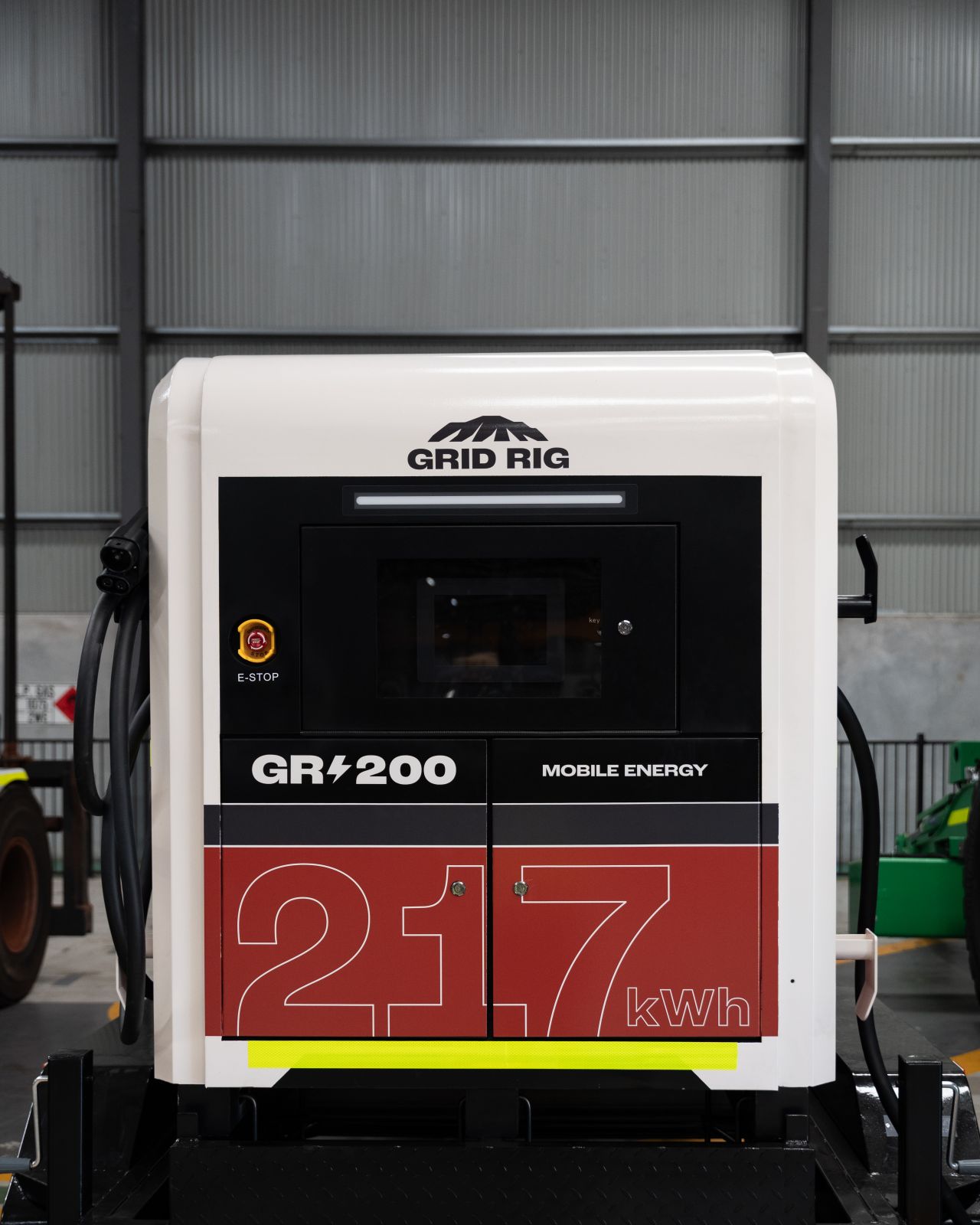
That is the end of the category Grid Rig builds. Our units are portable in the industrial sense, moved by forklift or trailer and running within hours, and they charge faster than any wall-mounted EVSE: up to 180 kW DC through the CCS2 plug, with battery storage inside so a standard grid connection (or none at all) is enough. It is the approach used in Ausgrid’s electric prime mover trial, where a battery-buffered unit was commissioned in hours rather than months.

Every unit supports OCPP for fleet management integration and is commissioned to Australian standards by our licensed contracting arm, Vantage West. If your EV charging problem outgrew the boot of the car, talk to us or compare the range.
Portable EV Charger FAQs
What does EVSE actually stand for?
Electric vehicle supply equipment: the electronics between the power outlet and the car. Any portable EVSE Australia retailers legitimately sell should carry RCM certification; check for it before buying, especially online.
Do Tesla and BYD use the same charger?
Yes. Every current Tesla Model, BYD, Hyundai and Kia sold in Australia takes Type 2 AC. One cable can serve a mixed household, and at a public charging station the same connector applies.
Can I charge an EV from a standard household outlet every night?
Yes, and plenty of EV owners never do anything else. A dedicated circuit is wise (talk to your electrician), avoid double adaptors and extension leads, and expect 10 to 15 km of range per hour of charge.
Is a 32A upgrade worth it over a 15 amp socket?
If your car accepts 7kW AC and you drive serious kilometres, usually yes. Installing a 32A outlet, installed by a licensed electrician, roughly doubles your electric car charging rate over 15A for modest cost, though at that point compare quotes for a hardwired unit too.
Can portable chargers use rooftop solar?
Any charger uses whatever your house feeds it, so daytime charging on solar works with the cheapest 10A cable. Smarter wall units (and some premium portables) can track your export and charge faster when the sun is generous.
What about charging electric trucks and machinery?
Different problem, different tool. AC portables top out around 22kW; heavy vehicles and site machinery need DC at 90 to 180 kW or more, which is where mobile battery-buffered units replace both the charging queue and, often, the diesel generator beside it.
Charging at a scale a cable can’t reach
Mobile battery power and DC fast charging delivered to any site in Australia, commissioned in hours rather than months.